Why Integrate PV and Storage – Energy Savings and Flexibility
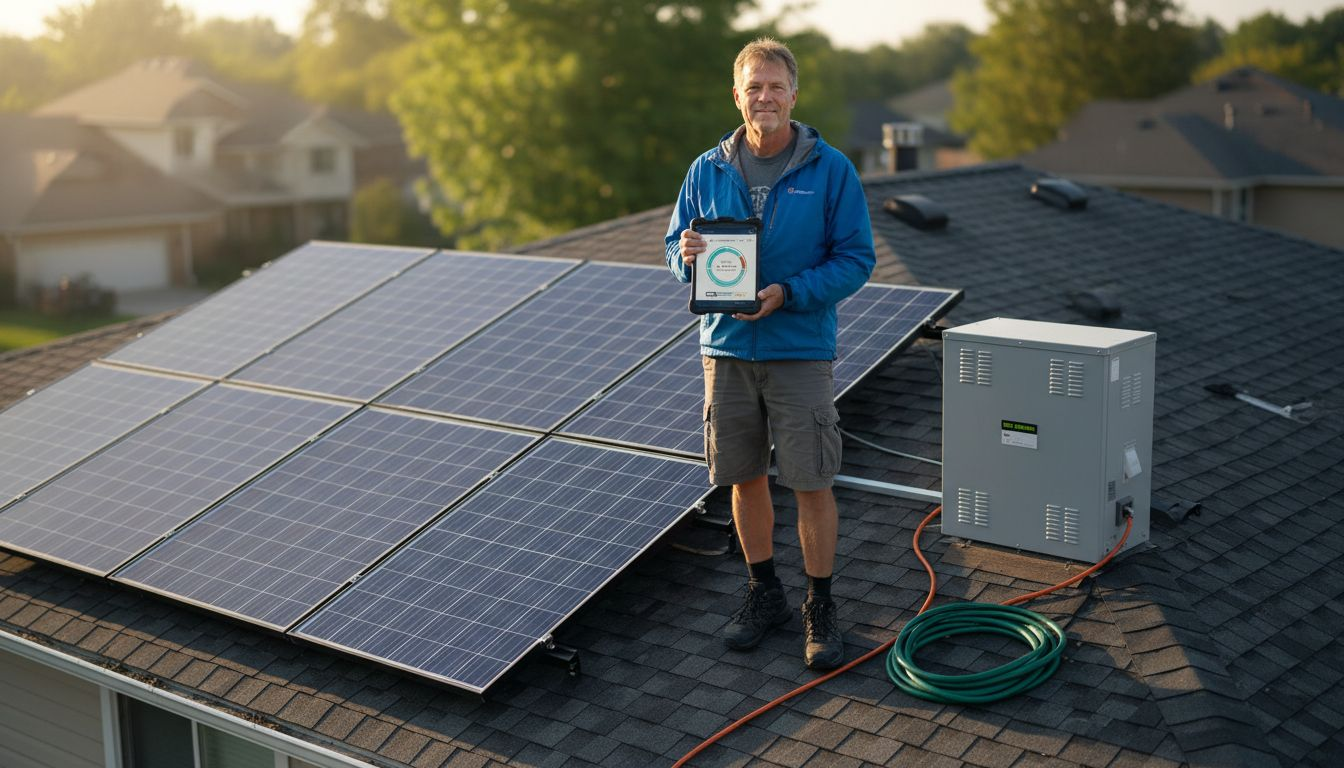
Over the past decade, the number of Central European homes adopting solar PV and storage has doubled, showing a shift toward energy independence once thought possible only in American suburbs. Rising electricity prices and concerns over supply disruptions have pushed more homeowners to look for solutions that deliver both savings and sustainability. This guide breaks down how integrated solar PV and advanced battery storage can transform your household into a smarter, more resilient energy hub.
Table of Contents
Key Takeaways
Point | Details |
PV and Storage Integration | Combining solar generation with battery storage enhances energy reliability and independence for homeowners. |
Storage Technology Options | Various technologies like Lithium-ion and Flow batteries serve different energy needs, affecting cost and efficiency. |
Financial Considerations | Initial investment is significant, but long-term savings and incentives can provide strong financial returns. |
Importance of Planning | Comprehensive energy audits and professional consultations are crucial for optimizing system performance. |
Defining PV and Storage Integration
Photovoltaic (PV) solar energy and storage integration represents a transformative approach to modernizing residential energy systems in Central Europe. This technical strategy involves combining solar panel generation with advanced battery storage technologies to create a more intelligent and responsive energy ecosystem. The integration fundamentally aims to address renewable energy challenges by enabling more flexible and reliable electricity management.
At its core, PV and storage integration allows homeowners to capture excess solar energy generated during peak sunlight hours and strategically store it for later consumption. This approach transforms intermittent solar generation into a consistent and predictable power source. Energy storage enables optimization of electricity usage by storing surplus energy during high production periods and releasing it during low generation times, effectively creating a personalized energy buffer that enhances grid independence.
The key components of successful PV and storage integration include:
High-efficiency solar panels
Advanced battery storage systems
Smart energy management interfaces
Grid connection and synchronization technologies
By implementing these interconnected technologies, homeowners can significantly reduce electricity costs, minimize grid dependency, and contribute to sustainable energy production. The integration provides multiple layers of benefits including financial savings, increased energy resilience, and reduced carbon emissions.
Pro tip: When planning PV and storage integration, always conduct a comprehensive energy audit to precisely match your system capacity with household consumption patterns.
Main Types of Storage Technologies
Energy storage technologies play a critical role in supporting the integration of photovoltaic systems, with multiple options designed to address different performance requirements and grid challenges. Europe relies on a diverse range of storage technologies to manage renewable energy generation, each offering unique characteristics suited to specific applications and operational demands.
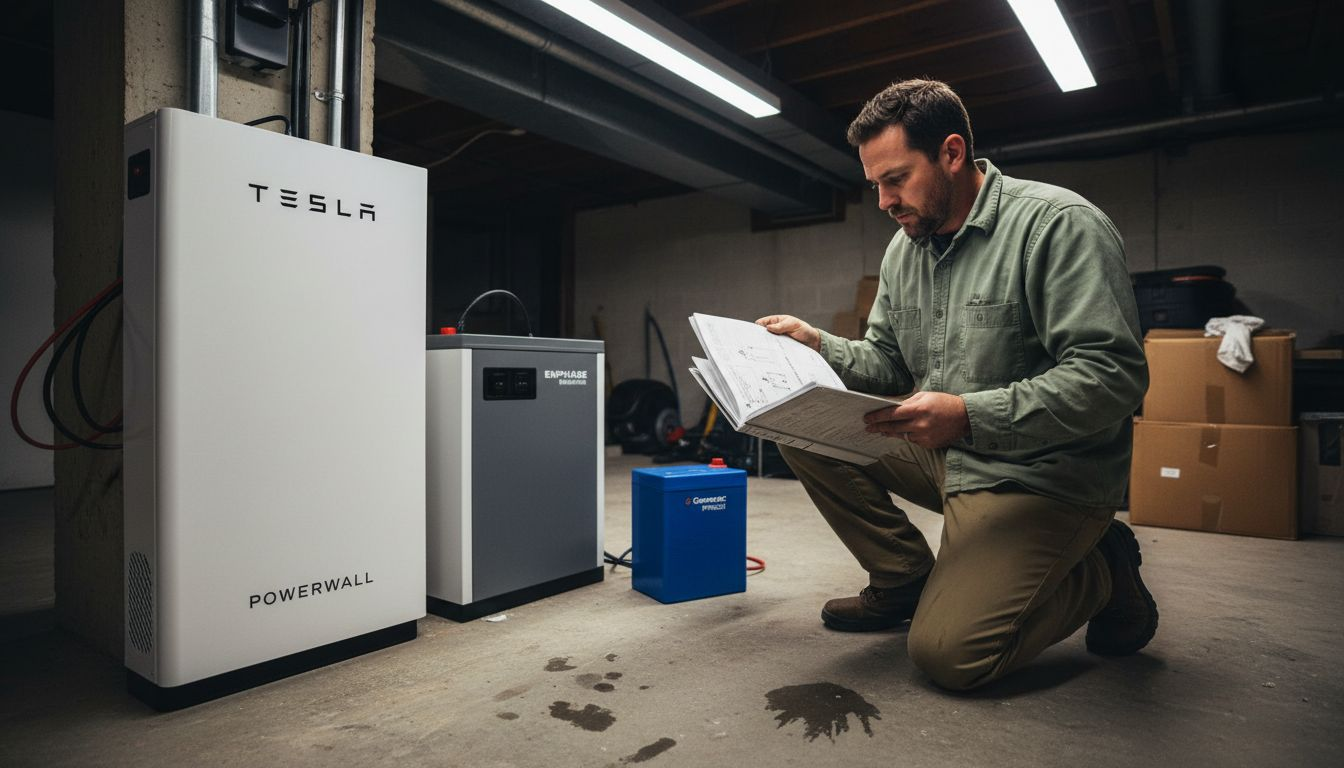
The primary storage technologies can be categorized into several key groups based on their operational duration and technical mechanisms:
Battery Storage Technologies:
Lithium-ion batteries: Most common for residential and commercial applications
Solid-state batteries: Emerging technology with higher energy density
Flow batteries: Ideal for longer-duration energy storage
Mechanical Storage Systems:
Pumped hydro storage
Compressed air energy storage
Flywheel energy storage
Emerging and Innovative Technologies:
Hydrogen storage systems
Supercapacitor technologies
Electrothermal and chemical storage solutions designed for grid flexibility
Each storage technology offers distinct advantages, with selection depending on specific energy requirements, infrastructure constraints, and financial considerations. The choice involves balancing factors like storage capacity, response time, efficiency, lifecycle, and initial investment costs.
Pro tip: Consult with a professional energy systems engineer to determine the most appropriate storage technology for your specific residential or commercial solar installation.
The following table summarizes how different storage technologies align with typical residential needs:
Storage Technology | Best Use Case | Response Speed | Space Requirement |
Lithium-ion Batteries | Daily home use | Instant | Compact, indoors or garage |
Flow Batteries | Long duration backup | Moderate | Larger, requires ventilation |
Pumped Hydro | Community/multi-home | Slow | Significant outdoor space |
Supercapacitors | Short peak demand | Ultra-fast | Small, supplement batteries |
How Integrated Systems Operate
Sophisticated integrated PV and storage systems dynamically balance energy generation and consumption through advanced control mechanisms that optimize electricity flow between solar panels, battery storage, and household or commercial energy demands. These intelligent systems continuously monitor solar generation, battery charge levels, and real-time energy consumption to make instantaneous decisions about energy storage and deployment.
The operational process involves several key stages:
Solar Energy Generation
Solar panels convert sunlight into electrical energy
Excess energy is routed to battery storage systems
Real-time monitoring tracks generation efficiency
Energy Storage
Batteries store surplus electricity during peak generation periods
Multiple control strategies enable smart dispatch of stored electricity
Charge and discharge cycles are optimized based on consumption patterns
Smart Grid Interaction
Systems can feed excess energy back to the electrical grid
Participate in ancillary service markets
Provide grid stabilization capabilities
The core objective of these integrated systems is maximizing energy self-consumption, reducing grid dependency, and creating a more flexible and responsive energy ecosystem. Advanced forecasting algorithms and machine learning techniques continuously improve the system’s predictive capabilities, allowing for increasingly precise energy management.
Pro tip: Invest in an integrated system with robust monitoring software to track real-time energy generation, storage, and consumption for optimal performance.
Key Benefits for Homeowners
Integrating photovoltaic systems with energy storage delivers transformative advantages for residential energy consumers, fundamentally reshaping how homeowners manage and consume electricity. This innovative approach provides multiple strategic benefits that extend far beyond traditional solar panel installations, creating a comprehensive energy management solution that enhances financial savings, energy reliability, and environmental sustainability.
The primary benefits for homeowners include:
Financial Advantages:
Significant reduction in electricity bills
Ability to store surplus energy for use during peak tariff periods
Potential for energy trading and additional income streams
Energy Independence:
Decreased reliance on electrical grid
Protection from power outages
Enhanced energy flexibility through intelligent storage and consumption management
Environmental Impact:
Reduced carbon footprint
Increased utilization of renewable energy
Support for local and national sustainable energy transitions
Moreover, integrated PV and storage systems offer homeowners unprecedented control over their energy ecosystem. Advanced monitoring technologies enable real-time tracking of energy generation, consumption, and storage, allowing for sophisticated decision-making that maximizes both economic and environmental benefits.
Pro tip: Conduct a comprehensive home energy audit before installation to optimize your PV and storage system design for maximum personal efficiency.
Costs, Savings, and Common Pitfalls
Integrating photovoltaic systems with energy storage represents a significant financial investment with complex economic considerations that extend far beyond initial purchase and installation costs. Homeowners must carefully evaluate multiple financial dimensions, including upfront expenses, long-term savings potential, and potential revenue streams from grid services and energy trading.
Cost Breakdown:
Initial system installation: €7,000 - €25,000
Annual maintenance: 1-2% of total system value
Potential grid connection fees
Battery replacement costs after 10-15 years
Potential Financial Benefits:
Electricity bill reduction of 40-70%
Potential grid service revenue
Increased property value
Tax incentives and government rebates
Common Pitfalls to Avoid:
Incorrect system sizing
Overlooking battery degradation rates
Misunderstanding incentive structures
Successful financial planning requires a comprehensive approach that considers not just immediate costs, but long-term performance, potential revenue streams, and evolving energy market dynamics. Homeowners should conduct detailed financial modeling and consult professional energy advisors to develop a robust investment strategy.
Pro tip: Request detailed 25-year financial projections that account for battery degradation, electricity price fluctuations, and potential revenue from grid services before making your final investment decision.
Below is a comparison of financial factors that influence investment decisions for PV and storage integration:
Factor | Short-Term Impact | Long-Term Impact |
Upfront Costs | Significant, may limit adoption | Offset by bill savings |
Maintenance | Minimal annual effect | Preserves system efficiency |
Battery Replacement | None initially | Major after 10-15 years |
Incentives | Reduces initial investment | Can boost ROI over decades |
Unlock True Energy Savings and Flexibility with Integrated PV and Storage Solutions
The article highlights the challenges homeowners face in maximizing solar energy use while managing costs and grid dependency. If you are aiming to reduce your electricity bills, increase energy independence, and benefit from smart energy management concepts like battery arbitrage and intelligent dispatch, Belinus offers tailored solutions designed just for you. Our advanced products, including the Energy Wall G1 graphene supercapacitor and Solis Inverters with seamless integration into our centralized Energy Management System, empower you to transform intermittent solar power into reliable, efficient energy for your home.
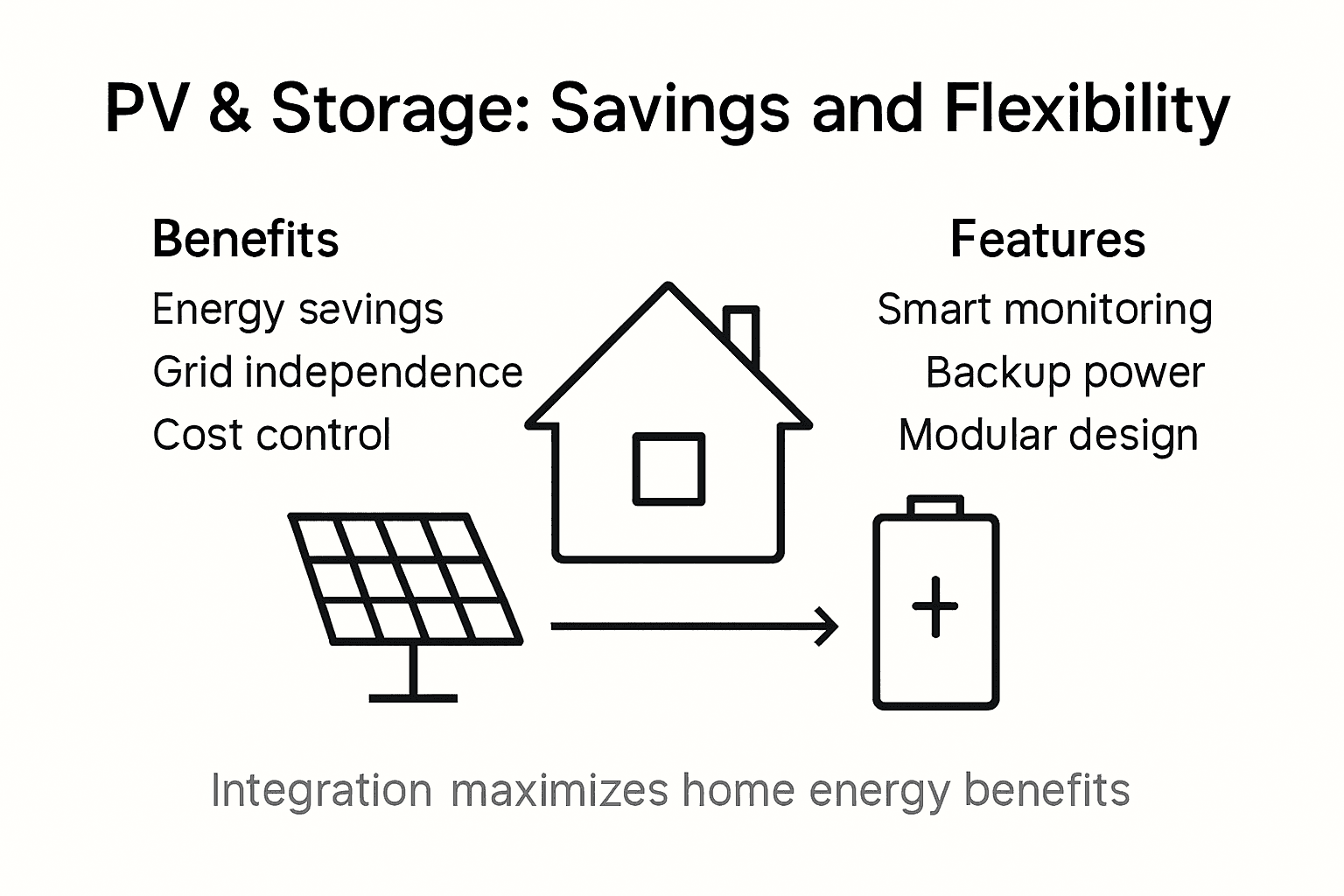

Ready to take control of your energy future today Join the many who trust Belinus to provide comprehensive residential solar PV and storage solutions that turn flexibility into financial savings Act now to benefit from cutting-edge technology and expert custom system design While maximizing self-consumption and minimizing grid dependency. Discover more about our innovative Energy Wall battery storage and intelligent EMS integration that make your solar investment truly work for you.
Frequently Asked Questions
What are the main benefits of integrating PV and storage systems?
Integrating PV and storage systems offers significant financial advantages, reduced grid dependency, and a positive environmental impact. Homeowners can save on electricity bills, store surplus energy for later use, and contribute to sustainability by utilizing renewable energy more effectively.
How do different storage technologies compare for residential PV systems?
Battery storage technologies like lithium-ion and flow batteries serve different purposes. Lithium-ion batteries are best for daily home use due to their compact size and instant response, while flow batteries are suited for longer-duration storage in larger installations. Selection depends on specific energy needs and available space.
How do integrated PV and storage systems optimize energy use?
These systems dynamically balance energy generation and consumption by continuously monitoring solar generation, battery charge levels, and real-time usage. Advanced control mechanisms enable surplus energy to be stored during peak sunlight and released when demand is higher, maximizing energy self-consumption.
What are some common pitfalls to avoid when integrating PV and storage?
Homeowners should avoid underestimating system complexity, incorrect sizing, and overlooking battery degradation rates. Additionally, it’s important to understand incentive structures and conduct detailed financial modeling to ensure a robust investment strategy.
Recommended
Comments