What is an LFP battery? Benefits, safety, and real-world value
- Apr 17
- 9 min read
TL;DR:
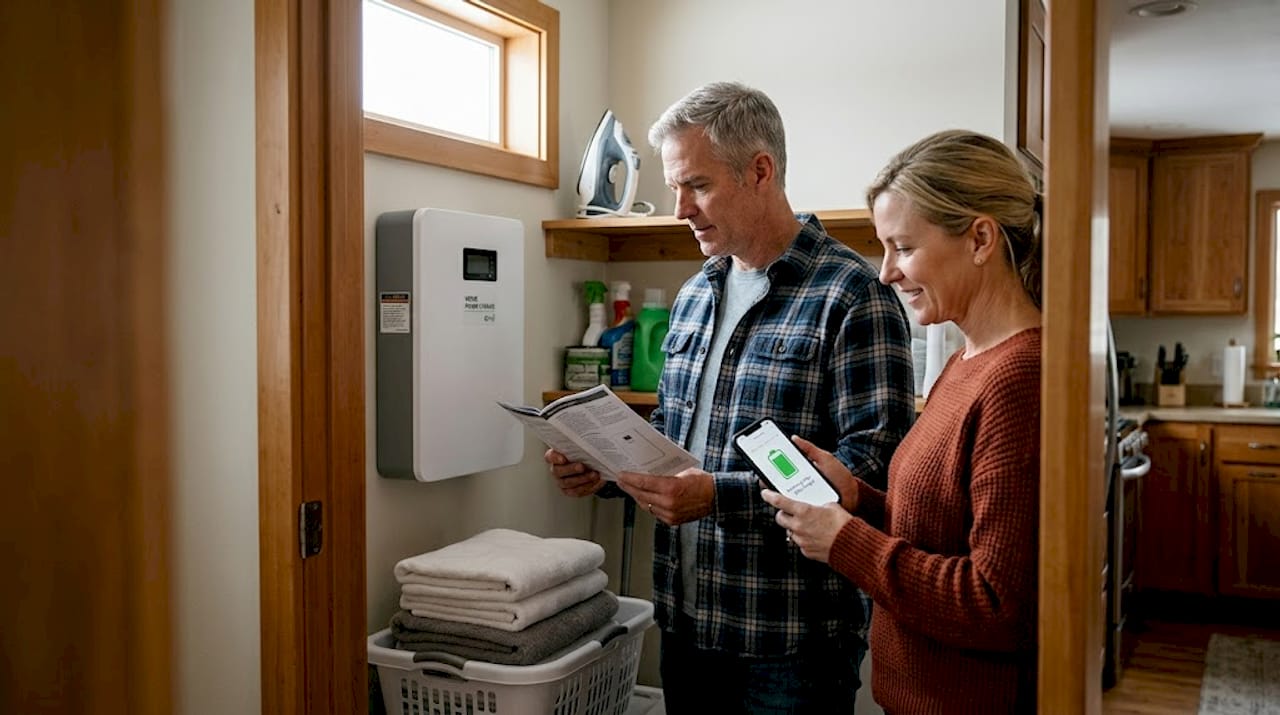
LFP batteries are safer, more stable, and have pass extreme safety tests, making them ideal for indoor use.
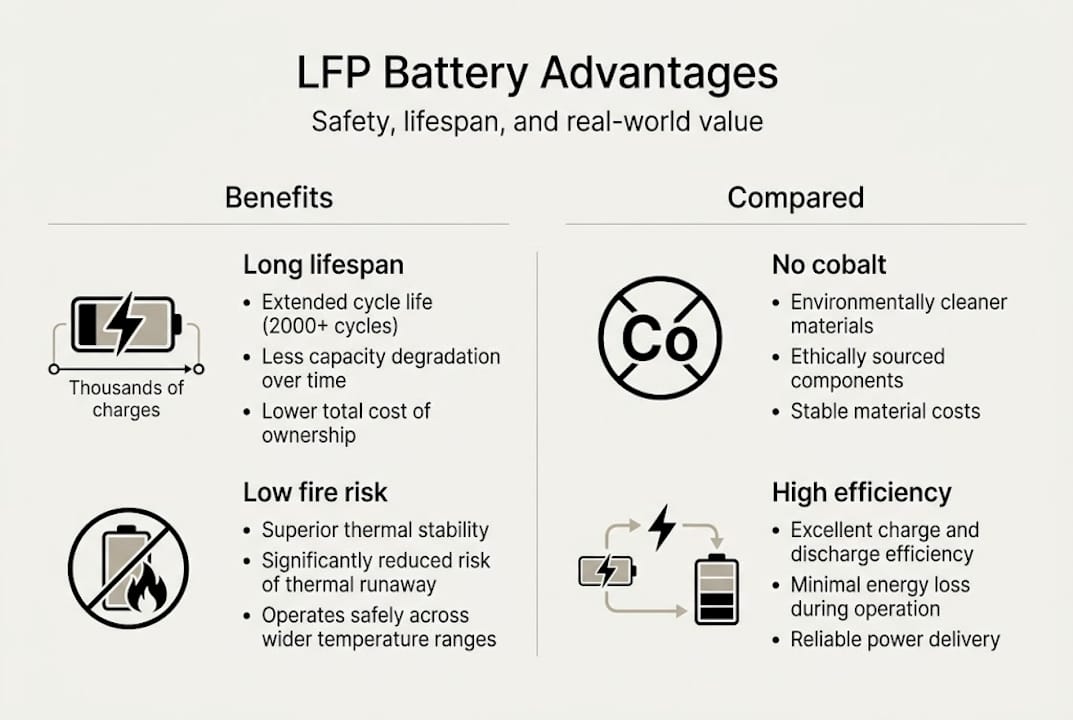
They offer a longer lifespan, higher cycle count, and lower maintenance costs compared to other lithium chemistries.
Adoption in Europe is growing due to safety, regulatory support, and suitability for residential, commercial, and utility applications.
Most people assume all lithium batteries carry the same fire risk. That assumption is costing European homeowners and businesses real money and peace of mind. Lithium iron phosphate batteries, known as LFP, are fundamentally different from the lithium chemistries that make headlines for the wrong reasons. They operate at lower temperatures, contain no cobalt, and have passed extreme safety tests that other chemistries simply cannot match. By the end of this article, you will understand exactly what LFP batteries are, why they are the preferred choice for indoor energy storage across Europe, and how to evaluate them for your own home or business.
Table of Contents
Key Takeaways
Point | Details |
LFP means safety first | Lithium iron phosphate chemistry is much less prone to fire, making it ideal for indoor energy storage. |
Long-term cost winner | LFP batteries deliver lower total ownership costs thanks to long lifespan and minimal maintenance. |
Optimal for EU energy | LFP technology fits perfectly with European solar, grid, and business needs, aided by subsidies and 3-phase support. |
Widely adopted today | European homes, businesses, and utilities are increasingly choosing LFP for reliable and sustainable power. |
What is an LFP battery? Core chemistry and structure explained
LFP stands for Lithium Iron Phosphate, with the chemical formula LiFePO4. It is a type of lithium-ion battery, but the cathode material is what sets it apart. While most people picture a battery as a black box that stores electricity, there are three core components doing the actual work: a cathode (positive electrode), an anode (negative electrode), and an electrolyte that allows ions to travel between them.
In an LFP cell, the cathode is made from lithium iron phosphate, paired with a graphite anode and a liquid electrolyte. During charging, lithium ions leave the cathode and move through the electrolyte to the anode, where they are stored. During discharge, those ions travel back, releasing energy as electricity. The nominal cell voltage sits at 3.2V, reaching a full charge at 3.65V and a discharge cutoff at 2.5V.
What makes LFP structurally unique is its olivine crystal structure. Think of olivine as a molecular cage that holds the iron and phosphate atoms in a very rigid, stable arrangement. This stability is not just a chemistry textbook detail. It is the reason LFP batteries resist heat, resist chemical breakdown, and last far longer than competing chemistries. CATL, one of the world’s largest battery manufacturers, has pushed LFP energy density to 205 Wh/kg, closing the historical gap with higher-risk chemistries.
Here is a quick snapshot of LFP’s core technical profile:
Specification | LFP value |
Nominal cell voltage | 3.2V |
Full charge voltage | 3.65V |
Typical energy density | 120 to 205 Wh/kg |
Cycle life | 2,000 to 6,000+ cycles |
Operating temperature range | -20°C to 60°C |
The key benefits of LFP chemistry at a glance:
Thermal stability: The olivine structure resists oxygen release, which is the primary trigger for battery fires
No toxic heavy metals: Zero cobalt or nickel, making it safer to produce, use, and recycle
Flat discharge curve: Delivers consistent voltage across most of the charge cycle, which simplifies energy management
Long calendar life: Retains capacity well even with daily cycling over many years
Wide compatibility: Works with standard inverters and LFP vs. other lithium batteries comparisons show clear advantages for stationary storage
For homeowners and businesses evaluating energy storage, these characteristics translate directly into lower risk, lower maintenance, and better long-term economics.
Is LFP the safest battery chemistry? Technical evidence and safety features
Now that we know what LFP batteries are made of, the next question is their safety profile. Let’s compare the real risks and protections.

The core safety advantage of LFP comes down to one chemical bond: the phosphorus-oxygen (P-O) bond. This bond is extremely strong, which means the phosphate structure resists releasing oxygen even when the battery is overcharged, punctured, or exposed to high heat. Oxygen release is what causes thermal runaway in other lithium chemistries, and thermal runaway is what turns a battery malfunction into a fire or explosion.
By contrast, NMC (Nickel Manganese Cobalt) and NCA (Nickel Cobalt Aluminum) cathodes release oxygen at much lower temperatures. Once that process starts, it is self-sustaining and very difficult to stop.
Here is how the three main chemistries compare on the metrics that matter most for indoor installation:
Chemistry | Peak thermal runaway temp | Runaway risk | Contains cobalt/nickel | Supply chain risk |
LFP | ~297°C | Very low | No | Low |
NMC | ~400°C (onset lower) | Moderate | Yes | High |
NCA | ~380°C (onset lower) | Moderate to high | Yes | High |
Field testing backs this up. LFP safety testing across 12,000 modules recorded zero thermal runaway events, including under nail penetration and UL9540A fire propagation tests. That is not a theoretical result. It is real-world validation at scale.
For European homeowners and businesses, this matters in a very practical way. LFP batteries can be installed indoors, in garages, utility rooms, or commercial plant rooms, without the ventilation requirements or fire suppression systems that other chemistries demand. This reduces installation cost and opens up far more siting options.
The absence of cobalt also removes ethical supply chain concerns tied to mining practices in certain regions, which is increasingly relevant for European businesses with ESG commitments. Understanding grid-connected battery safety and how battery chemistry roles in grid applications differ helps clarify why LFP dominates new installations.
Pro Tip: If a vendor quotes you a cheaper NMC system for indoor use, ask specifically about their fire suppression and ventilation requirements. Those costs often close the price gap entirely.
How does LFP perform? Lifespan, efficiency, and total cost
After establishing safety, let’s dive into how LFP batteries actually perform in real-world home and business energy use.
Lifespan is where LFP genuinely separates itself from the competition. Most LFP systems are rated for 2,000 to 6,000 full charge cycles, which translates to 10 to 20 years of daily use. For a homeowner cycling their battery once per day with solar, that means the battery could outlast the solar panels themselves. Compare that to NMC, which typically degrades significantly after 1,000 to 2,000 cycles, and the difference in return on investment becomes obvious.
LFP also requires no active cooling. Other chemistries need thermal management systems to prevent overheating, which adds cost, complexity, and potential failure points. LFP runs comfortably across a wide temperature range without fans, liquid cooling loops, or additional hardware. That simplicity means lower maintenance costs over the system’s life.
European homeowners benefit from another layer of economics: solar and storage savings are amplified by available subsidies and net metering policies across the EU. When you factor in those incentives, the total cost of ownership (TCO) of an LFP system looks very different from the sticker price.
Key performance metrics for LFP in residential and commercial settings:
Cycle life: 2,000 to 6,000+ cycles depending on depth of discharge
Round-trip efficiency: 95 to 98%, meaning very little energy is lost in the charge/discharge process
Cost per cycle: Consistently lower than NMC or NCA over the system’s lifetime
Maintenance: Minimal, no cooling systems or regular chemical servicing required
TCO advantage: Home energy storage savings of 15% or more are achievable with proper system design
Empirical data from deployed systems shows 98% solar smoothing availability and up to 40% fleet TCO savings when LFP is integrated into commercial energy management. For businesses, those numbers translate directly to the bottom line. You can explore battery savings for businesses in detail to see how these figures apply to different commercial scenarios.
Pro Tip: Always evaluate battery systems on cost per usable kWh over the full warranty period, not just the upfront price per kWh. LFP almost always wins that calculation.
Where is LFP used? European market adoption and applications
Understanding technical benefits is powerful. Now, discover exactly how and where LFP batteries are being used across Europe.
LFP has moved well beyond early adopters. It is now the dominant chemistry for new stationary storage installations across the EU, driven by a combination of safety regulations, subsidy structures, and grid compatibility requirements. EU solar and storage adoption is accelerating, with LFP leading because of its indoor siting flexibility, 3-phase grid compatibility, and 10 to 20 year longevity.
Top European adoption scenarios:
Residential solar storage: Homeowners pair LFP batteries with rooftop solar to maximize self-consumption and reduce grid dependence. LFP’s flat discharge curve and indoor safety make it ideal for this use case.
Commercial and industrial backup: Businesses use LFP for uninterruptible power and peak shaving. Enterprise energy storage examples show how companies cut demand charges and protect critical operations.
Utility and grid-scale storage: Utility-scale LFP installations balance renewable intermittency, provide frequency regulation, and enable energy arbitrage at the MW scale.
EV charging infrastructure: LFP battery buffers smooth the load from fast chargers, preventing grid spikes and reducing connection costs for charging hubs.
Main drivers of LFP adoption in Europe:
Indoor safety: No special ventilation or fire suppression needed
EU subsidies: Many member states offer direct grants or tax incentives for LFP-based storage
3-phase compatibility: Essential for European residential and commercial grid connections
Long service life: Aligns with 20 to 25 year solar panel warranties
Regulatory momentum: EU battery regulations increasingly favor cobalt-free chemistries
For homeowners exploring clean energy solutions or businesses evaluating batteries in renewable energy integration, LFP is no longer a niche option. It is the practical, proven default.
What most guides get wrong about LFP batteries
Most energy guides treat all lithium batteries as roughly equivalent, varying only by price and capacity. That framing misses the most important story in energy storage right now.
LFP is not just a safer version of the same thing. The difference in thermal runaway risk between LFP and NMC is not marginal. It is the difference between a chemistry that has never triggered a runaway in 12,000 tested modules and one that requires active suppression systems. That gap has enormous implications for where batteries can be installed, how they are insured, and what regulations apply.
Conventional advice also ignores TCO almost entirely. Guides focus on upfront cost per kWh, which consistently makes LFP look expensive. But when you account for cycle life, maintenance savings, and the avoided cost of cooling infrastructure, LFP wins decisively over a 10 to 15 year horizon. European energy cost optimization strategies are increasingly built around this reality.
Fast-moving EU policy is another factor most guides have not caught up with. Cobalt-free mandates, indoor installation standards, and grid service requirements are all pushing the market toward LFP as the default chemistry for new installations. If you are making a storage decision in 2026, you are operating in a regulatory environment that already favors LFP. That context belongs in every buying guide. It is rarely there.
Find the best energy solution with LFP batteries
Ready to make LFP part of your energy strategy? Here’s how Belinus can help.
At Belinus, we work with European homeowners and businesses every day to design LFP-based energy systems that actually fit their needs, budgets, and grid connections. Whether you are looking at residential solar storage, commercial peak shaving, or utility-scale arbitrage, our team combines deep technical knowledge with real installation experience across the EU.
Our Belinus energy solutions platform integrates LFP storage with solar PV, EV charging, and our intelligent Energy Management System, giving you 15-minute dynamic tariff optimization and real-time performance monitoring through a single dashboard. Explore our site to compare solutions, use our 25-year financial modeling tool, or connect directly with an advisor who can walk you through the numbers for your specific situation. The right LFP system pays for itself. We can show you exactly how.
Frequently asked questions
What makes LFP batteries safer than other lithium-ion types?
LFP’s strong P-O bonds resist oxygen release and thermal runaway, and the chemistry contains no cobalt or nickel, which dramatically lowers fire risk compared to NMC or NCA batteries.
How long do LFP batteries typically last?
LFP batteries typically deliver 10 to 20 years of reliable service with daily cycling, significantly outlasting most other lithium battery chemistries under the same conditions.
Are LFP batteries supported by EU incentives and regulations?
Yes, many EU member states offer subsidies and regulatory backing for LFP-based solar and storage systems, and EU regulatory trends increasingly favor cobalt-free chemistries like LFP for new installations.
Where can LFP batteries be used in home or business energy systems?
LFP batteries are well suited for home solar storage, business backup and peak shaving, and utility-scale projects, with the added advantage that their indoor safety profile means no special ventilation or fire suppression is required.
Recommended
Comments